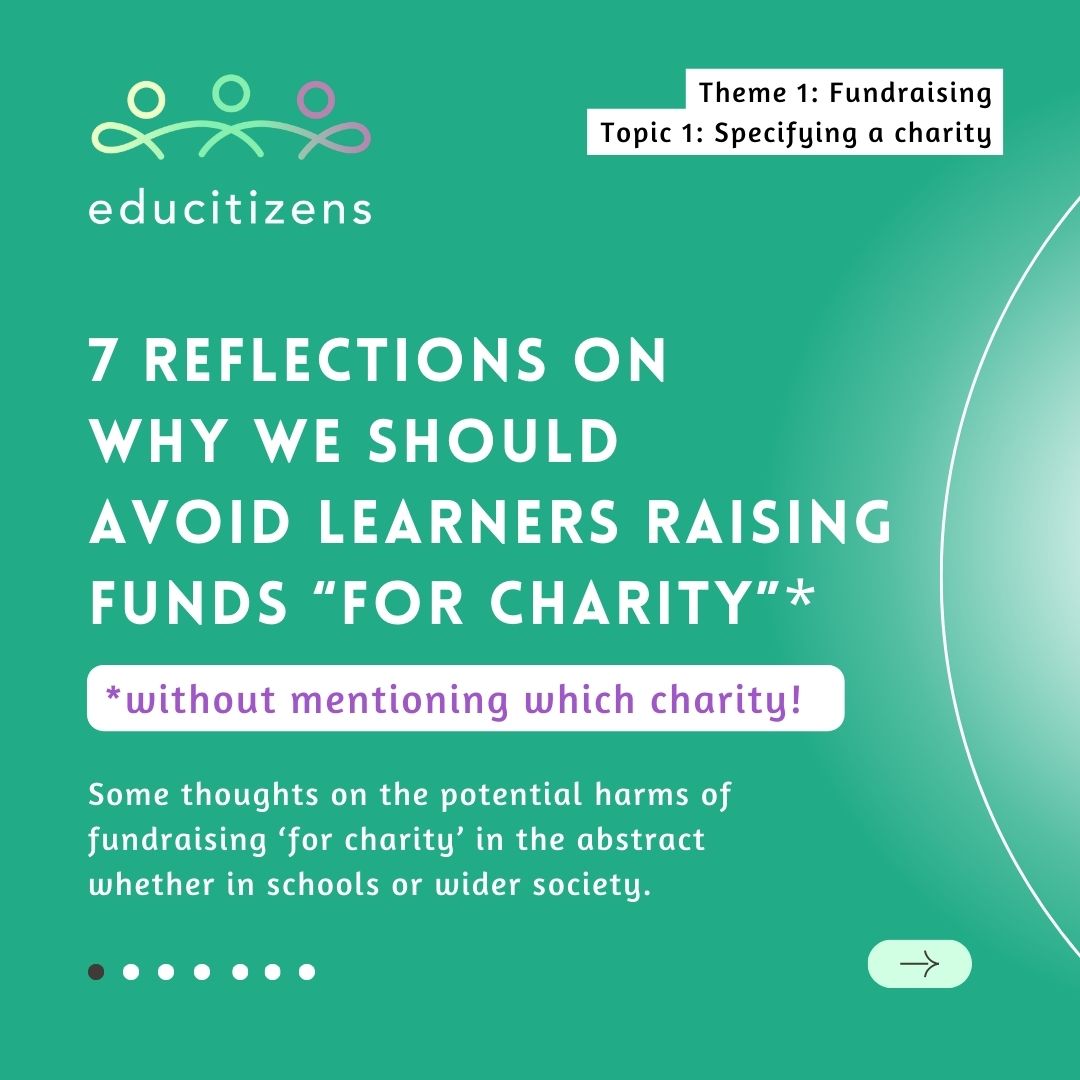
Whether in schools, or society, it’s commonplace to see signs advertising charity bake sales, charity runs, charity weeks, charity concerts, etc without any mention of which social or environmental impact organisation is being supported.
When I worked within schools, I insisted that students at minimum had a poster up by their cake sale or event, explaining what the charity was, and that similarly any charity concerts had some information available in the programme with an announcement.
However, I observed that this often slipped, and students, staff and wider community members didn’t always seem the same urgency on the matter as me. Although observing various stalls, I often saw other students and staff asking what the event was in support of, showing curiosity and care existed within the community.
I recognise that the students involved leading the sale usually understood what they were raising funds for, and why. However, I had a strong intuition, that telling the wider community to give ‘to charity’ could have some unexamined harms associated.
Taking a step back to reflect, here’s an attempt at unpicking the possible harms of raising funds for charity in the abstract.
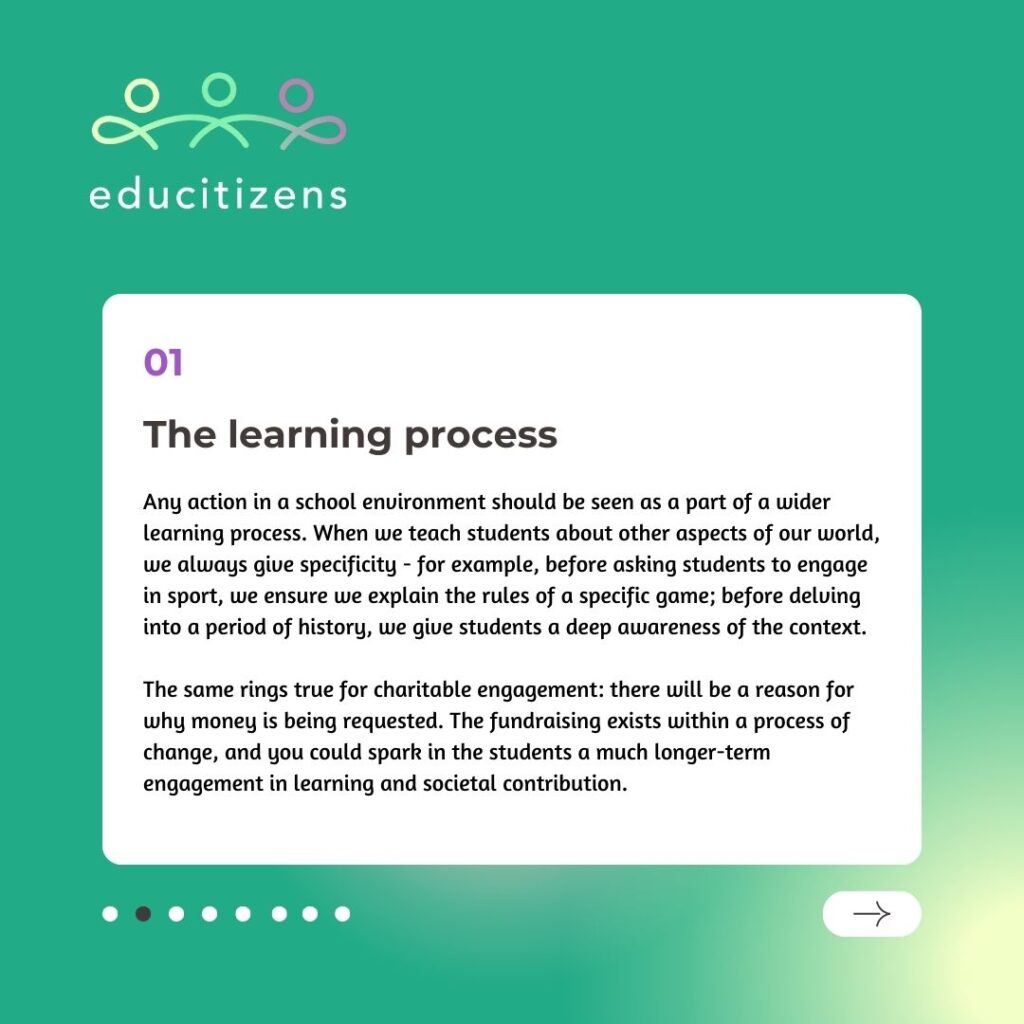
1. A learning process is cut through
Any action in a school environment should be seen as a part of a wider learning process. When we teach students about other aspects of our world, we always give specificity – for example, before asking students to engage in sport, we ensure we explain the rules of a specific game; before delving into a period of history, we give students a deep awareness of the context. The same rings true for charitable engagement: there will be a reason for why money is being requested leading to a wider process of change, and you could stimulate a much longer-term process in a students of societal contribution.
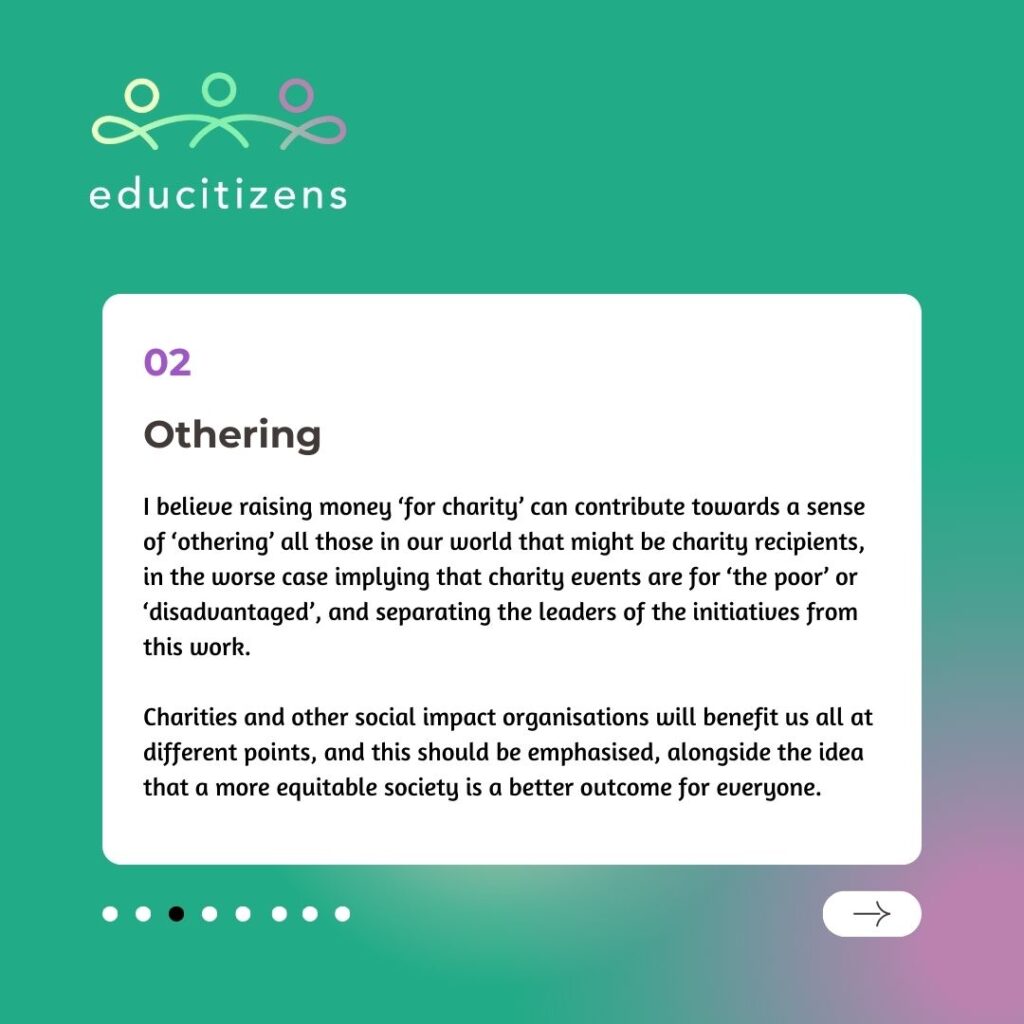
2. Othering
I believe raising money ‘for charity’ can contribute towards a sense of ‘othering’ all those in our world that might be charity recipients, in the worse case implying that charity events are for ‘the poor’ or ‘disadvantaged’, and separating the leaders of the initiatives from this work. Charities and other social impact organisations will benefit us all at different points.
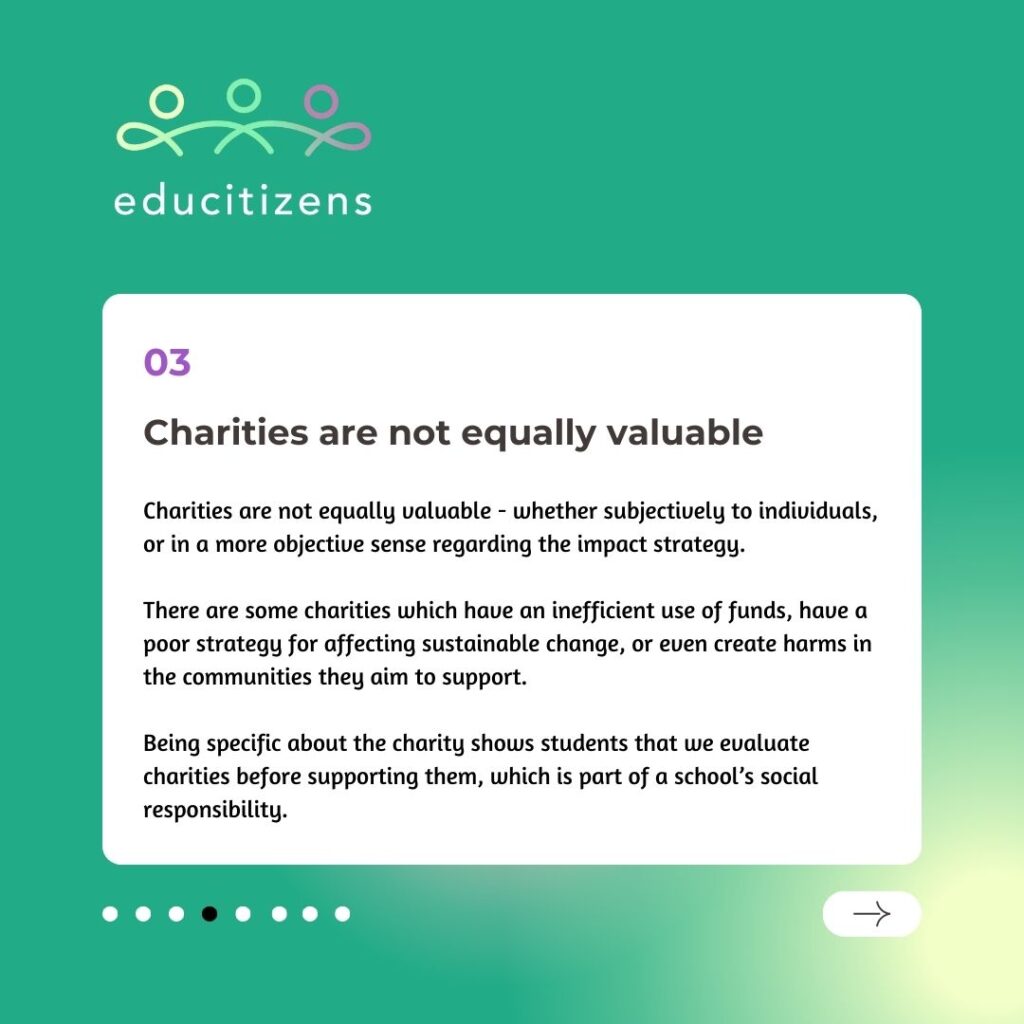
3. Charities are not equally valuable
Charities are not equally valuable – whether subjectively to individuals, or in a more objective sense regarding the impact strategy.
There are some charities which have an inefficient use of funds, have a poor strategy for effecting sustainable change, or even create harms in the communities they aim to support.
Being specific about the charity shows students that we evaluate charities before supporting, which is part of a school’s social responsibility.
4. You are likely to raise less money
People sometimes give money as part of a ticket or similar regardless of the cause.
However, a clear explanation and compelling story for what the funding will do is much more likely to capture attention and raise more funds – whether in the short-term or longer-term.
5. Accountability
It’s important that people are aware of which charity is being supported to ensure that the funds do get to the intended cause. If the charity is not specified, it’s difficult to check.
6.You miss giving a charity a chance for promotion
Every time you mention a charity’s name in a public space positively, you open that charity to an audience of potential future supporters. This holds huge value for charities and can translate into wider growth and impact opportunities for them, beyond the initial event.
7. Contribution to charity fatigue
More research needed here, but I believe if we are connected to the human or animal needs behind a charity, we are much less likely to feel fatigued by the request, than if we are asked to contribute or be part of something more abstract.
Ultimately we are attracted to stories and naturally connect with shared human experience.
#EduCitizens #Ethics #Change #Community