Thanks for the #EduCitizens response so far, it’s been motivating amidst uncertainty! Today, let’s dive and build our collective ‘contents’ page, of the ‘book’ of practical citizenship education ethics I hope we can write together.
I figured I could apply for a PHD, but I don’t have the immediate energy, time or funding – let’s move to the sharing of ideas and practical implementation so that some of these thoughts we build together can have immediate effect.
Topic: The building blocks of active citizenship education
I recognise that the link between #education and #activecitizenship is incredibly complex and requires a holistic analysis of schools and their relationship with society.
I’m not sure how many people have looked at the whole working of a school through a critical active citizenship education lens – do get in touch if you have!
However, through on the ground leadership of service, partnerships and social impact education in a large IB school for 5 years, I quickly realised that to truly fulfil the mission of advancing building active citizens, we needed the whole school’s support!
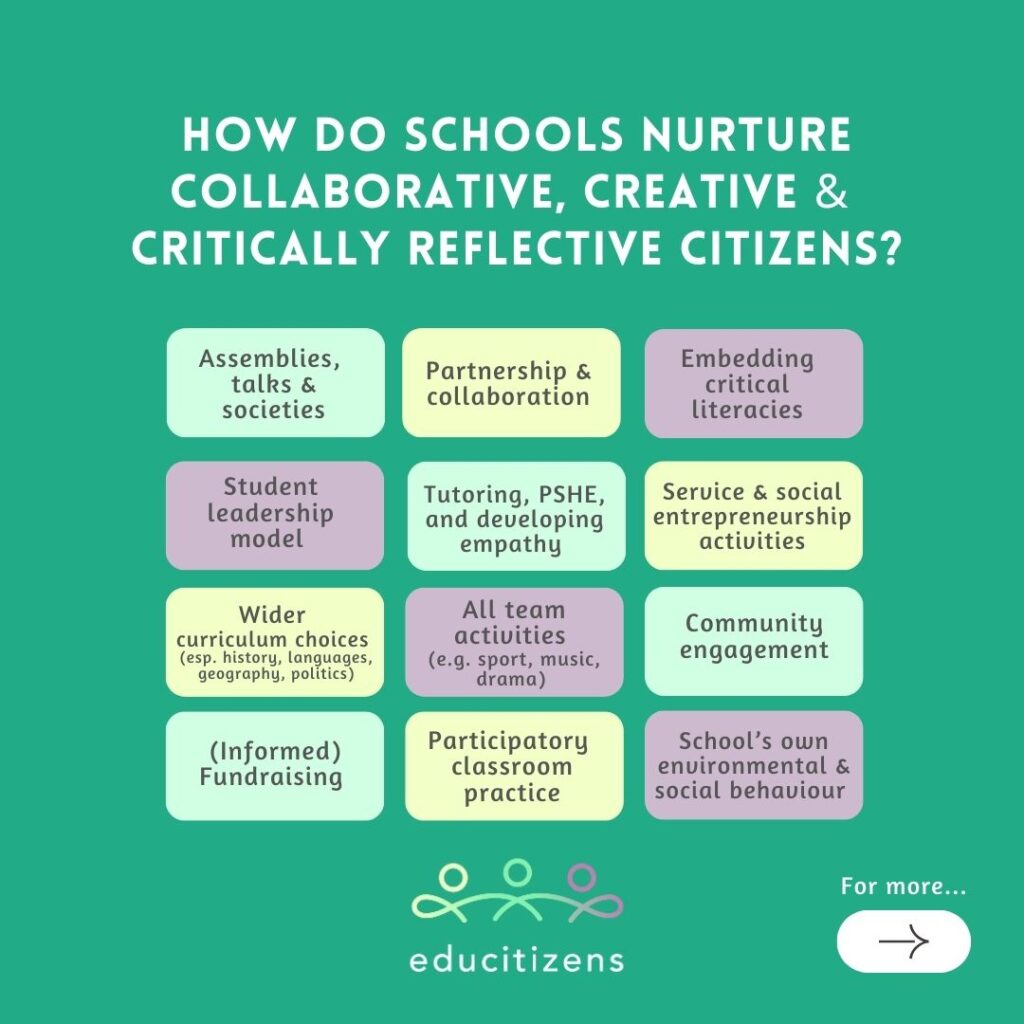
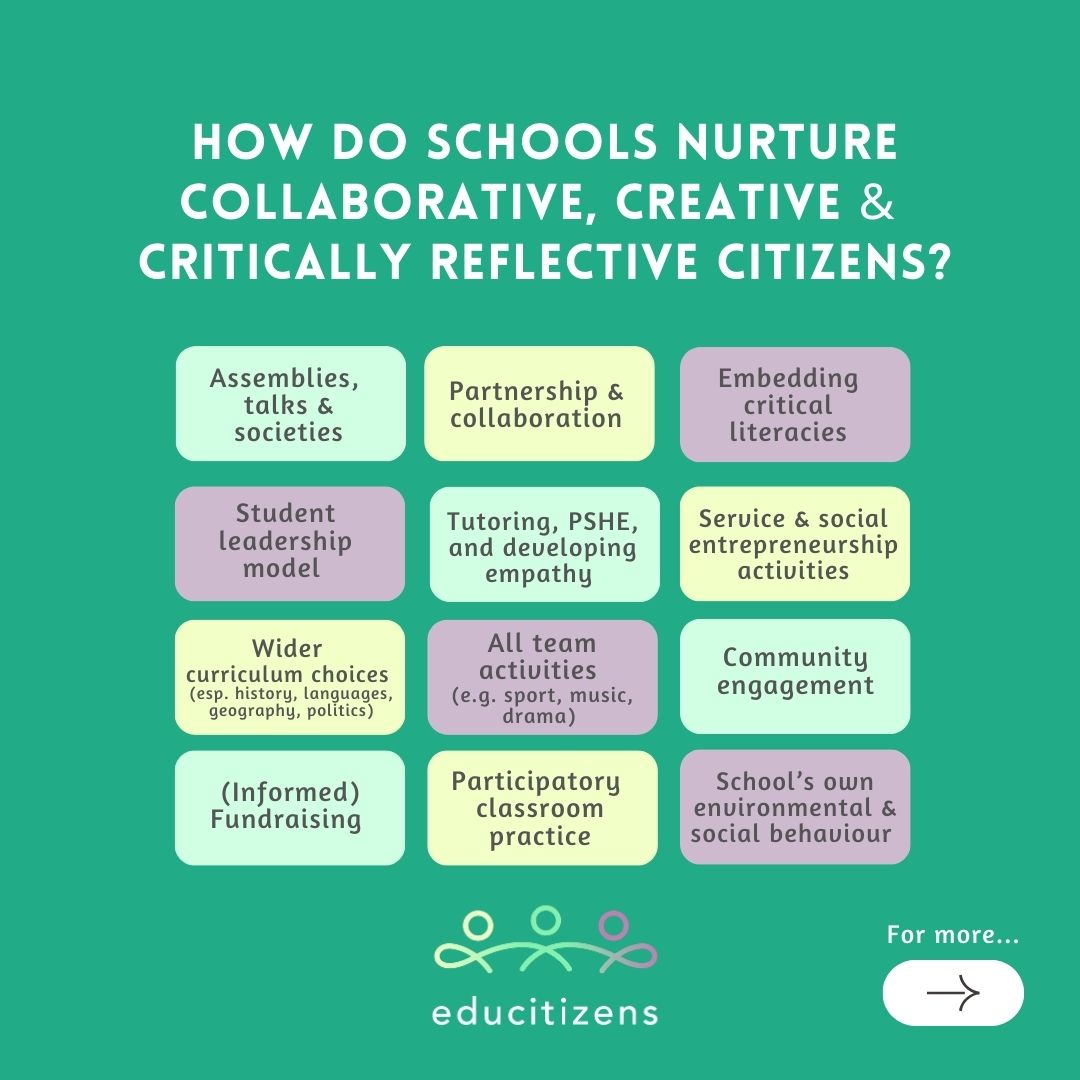
From my own analysis, learners’ (and often staff) relationship with social change and citizenship is driven by a mix of the following factors. I recognise that each of these factors is immensely complex, and not so easily placed into a ‘box’ as in the visual below!
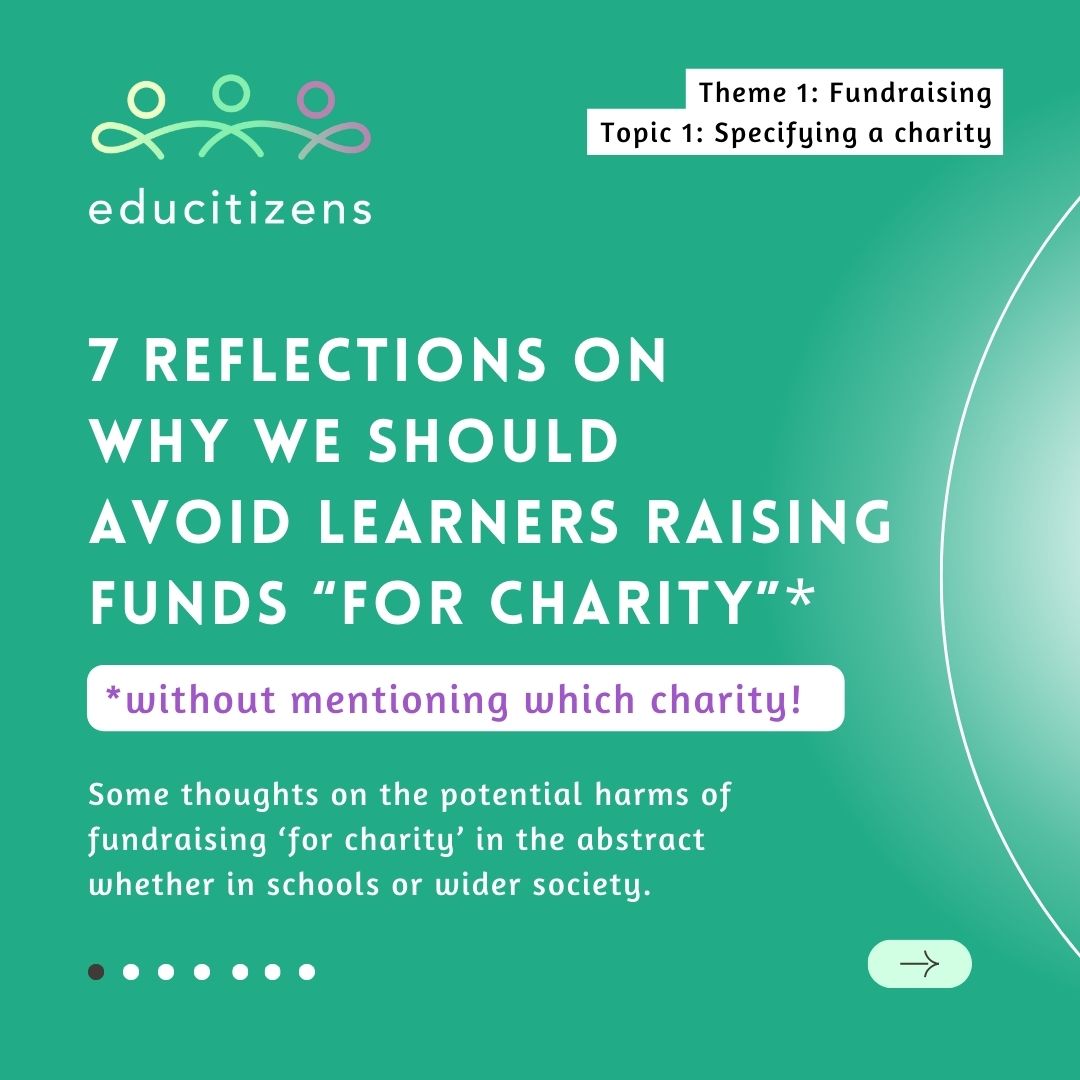
- The framing and approach taken to fundraising and charitable giving
- The framing and approach towards service and social entrepreneurship activities
- The school’s every day relationship with the community.
- The school’s own environmental practices and response to societal issues.
- Embedding critical reflection, including reflexive thinking
- Ensuring participatory practices are present in the classroom.
- The values and approach adopted by school leaders, teachers and visiting speakers, given in assemblies and talks.
- Partnerships that the school forms with other schools, and wider organisations.
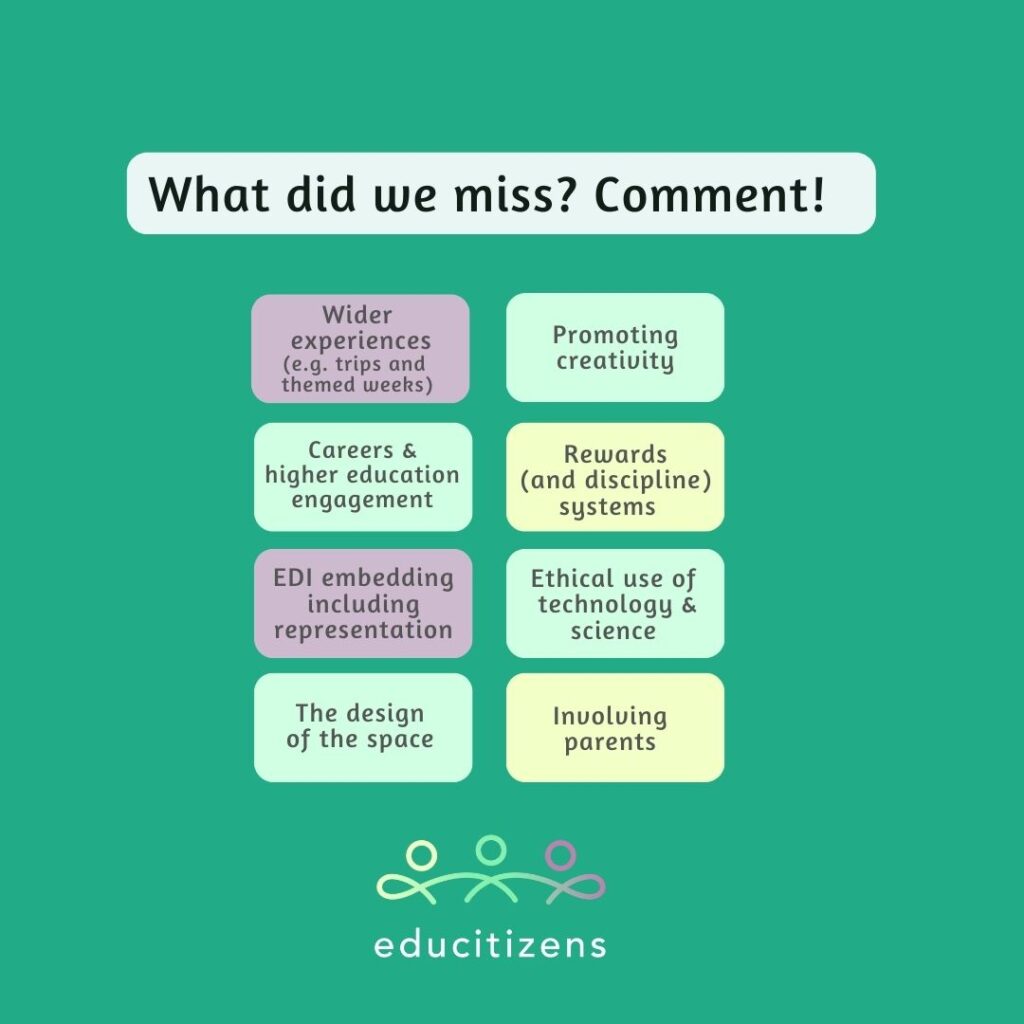
- The careers opportunities presented to students, including role modelling active citizens among speakers and alumni
- Enabling students to explore and nurture their creative abilities.
- Having a clear philosophy and framework of student leadership especially in relation to charity, service and inclusion
- Through close 1-1 tutoring, PSHE and wider group mentorship.
- Embedding all aspects of EDI across the fabric of the school, recognising the complexity of this, and difficulty placing this in a box!
- Enabling students to use tech and science for good.
- The wider curriculum content and design, exploring what is included and excluded (e.g. in history)
- Team activities – often the best way to demonstrate collaboration in leadership.
- The space of the school – sometimes this can play a huge role in how inclusive a place is.
- Engaging parents – especially given values and attitudes are initially shaped in the home, and involving them can amplify the work of the school.
- The way in which rewards (and punishments) are given.
- Wider experiences, such as themed weeks or excursions (whether locally or abroad)
What did I miss? Comment below! Let’s build this together….
If you know someone working in the space, please ask them to reach out and join the #EduCitizens community! Sign-up to the monthly mailing list here: http://eepurl.com/iCjQhQ
#EduCitizens #Community #Ethics #Change #Citizenship
Follow the project on instagram here: www.instagram.com/educizitens
#EduCitizens #Community #Ethics #Change #Citizenship